
Mastering Sailing · Tip 02/25
When the shift is in your favour, go fast
At the recent regatta in Almería, the wind was constantly shifting around a predominant direction. The shifts would come and go, sometimes to the right and a few times to the left.
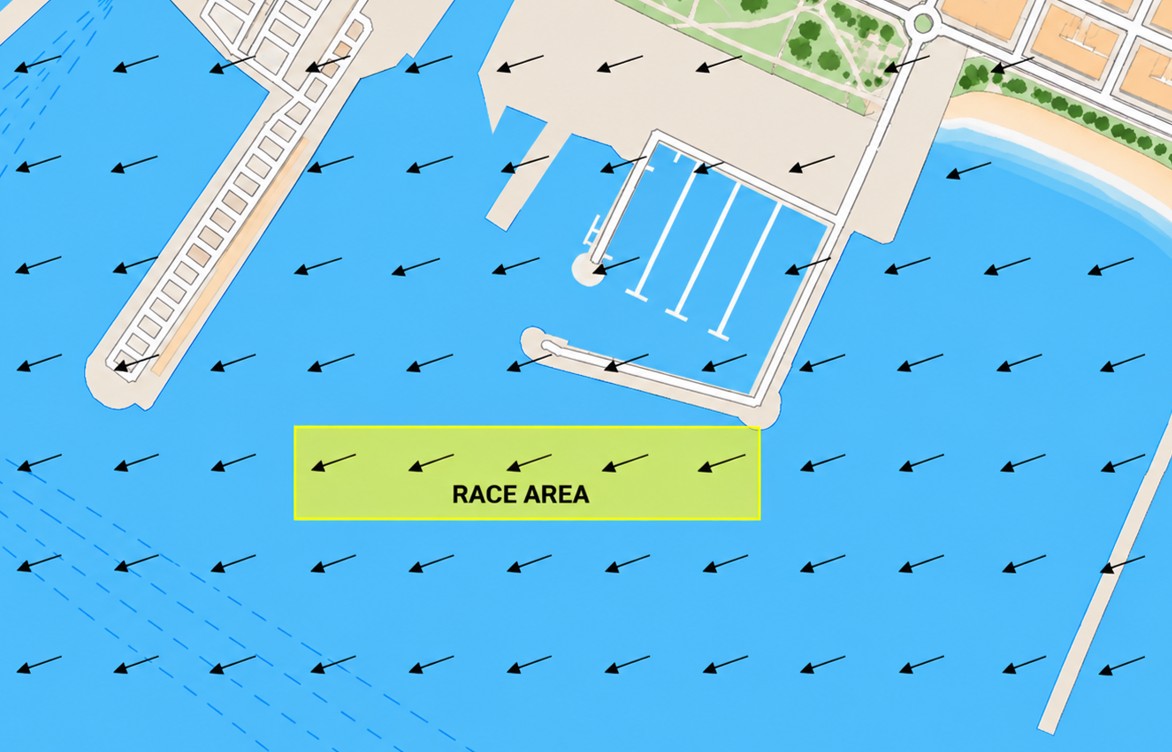
Because of the position of the racecourse, port tack was usually the longer tack on the upwind leg. Most of the time we would sail on port, waiting for a favourable right-hand shift. When it arrived, we could tack onto starboard and sail towards the mark for as long as the shift lasted.
But sometimes the opposite happened.
A left-hand shift could allow us to point much closer to the windward mark — and occasionally even higher than the direct course to it.
In these conditions, I observed two situations that illustrate the same principle.
1. Turn a temporary advantage into distance
In one of the races, I was watching two boats sailing very close together, with very similar speed.
When a favourable shift arrived, both boats gained angle. One boat maintained its normal upwind sailing angle, while the other bore away slightly and used some of that extra angle to sail faster.
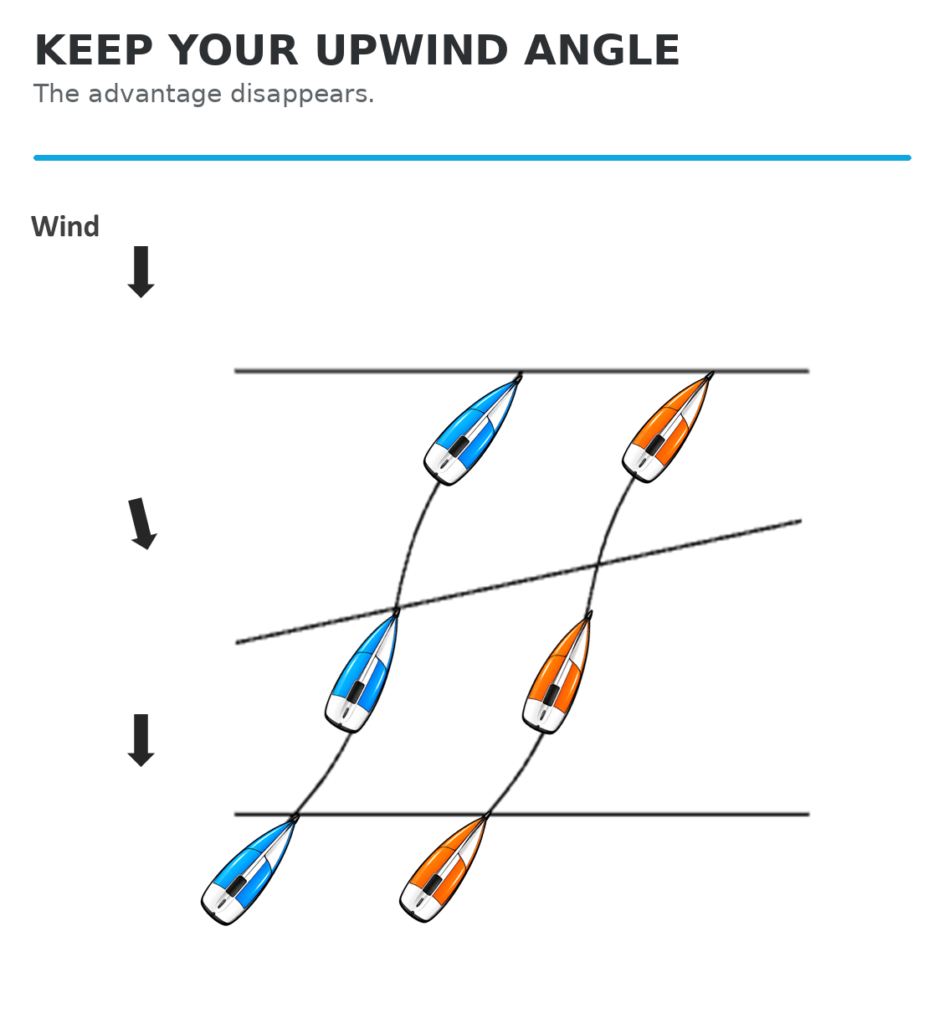
If both boats simply maintain their normal upwind angle, the shift can temporarily change their relative position. But when the wind returns to its predominant direction, that apparent advantage disappears.
Now compare that with using the extra angle for speed:
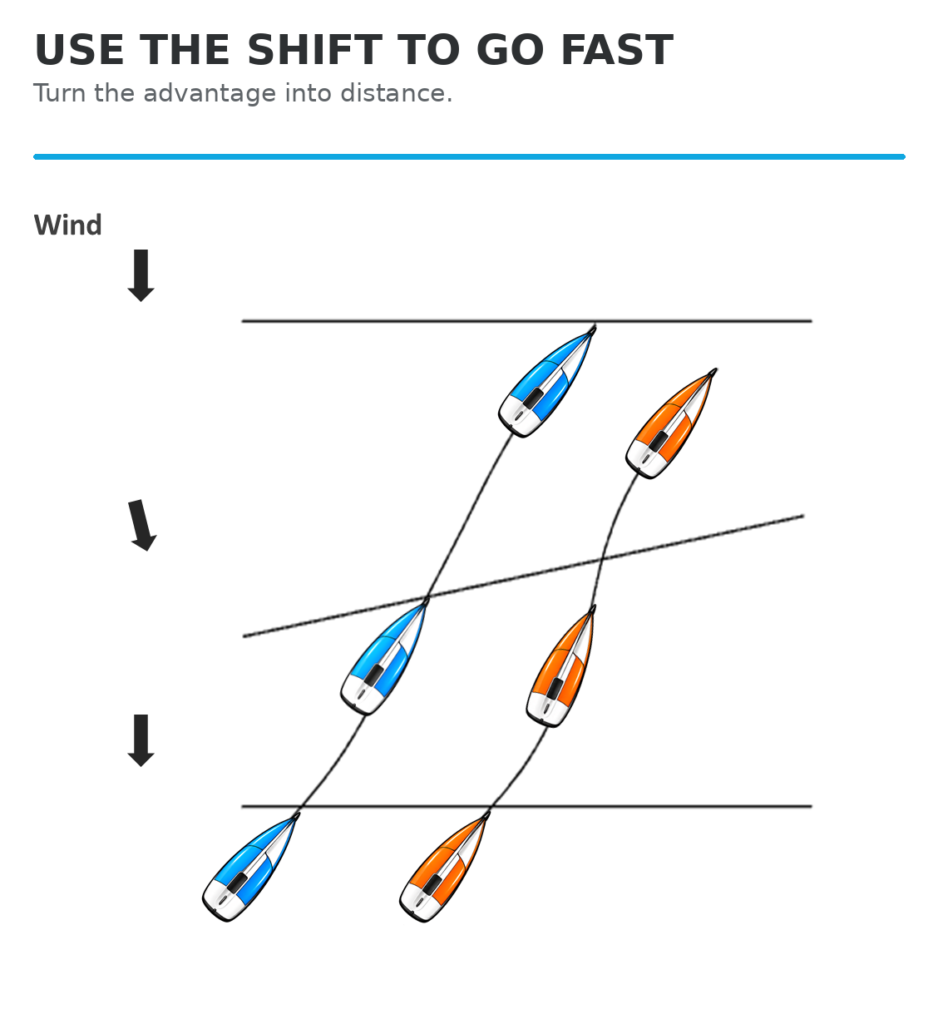
The second boat bears away slightly and accelerates while the favourable shift lasts. When the wind returns to its predominant direction, the gain remains: the temporary advantage in angle has been converted into real distance.
2. If you can point at the mark, don’t sail higher than it
The left-hand shifts created another interesting situation.
Sometimes the shift was large enough that a boat could point directly at the windward mark — or even higher than it while maintaining its normal upwind angle.
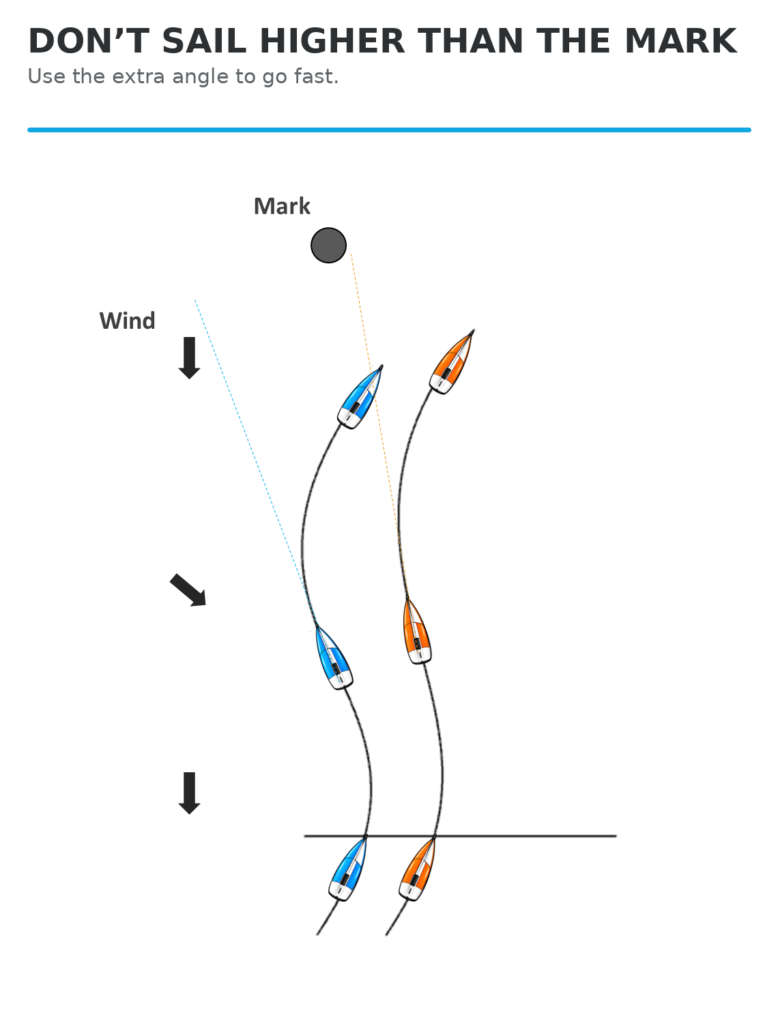
In that situation, there is little benefit in continuing to sail your normal close-hauled angle and pointing above the mark.
Bear away, sail directly towards the mark and use the extra angle to go faster.
This applies even if the mark is still far away and you expect the wind to eventually return to its predominant direction. You have the favourable angle now. Use it.
Both situations lead to the same idea:
A favourable shift gives you extra angle. Don’t waste it. Turn it into speed and distance.
When the shift is in your favour, go fast.